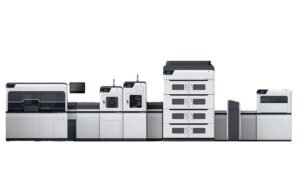
Four Key Factors Laboratories Should Consider
When Implementing Automation for an overall process optimization and better healthcare service standards.
Interoperability
Laboratories rely on analyzers from various disciplines to conduct a wide range of tests and often need the flexibility to select instruments from different vendors based on specific testing requirements.
To support this need, automation solutions must provide interoperability, allowing labs to integrate instruments and customized laboratory middleware seamlessly. This ensures high performance in their testing environment without being restricted to a single supplier’s ecosystem.
Given the specialized nature of both middleware systems and analytical instruments, IDS offers laboratories the freedom to choose the right partners in both aspects to achieve optimal system integration and performance.
Benefits
- Vendor flexibility – Choose the best analyzers instruments, middleware integration without being locked into a single vendor’s ecosystem.
- Optimized Utilization for Peak Laboratory Performance – Enabling laboratories to create an optimized operating environment by integrating hardware, software, and analytical instruments into a cohesive system tailored to their workflow.
- Standardized workflows – Maintain operational efficiency and process consistency across multiple platforms, eliminating manual intervention from siloed workflow.
Adaptability
Change is inevitable. Testing requirements will continue to evolve due to advancements in diagnostic technologies, regulatory updates, and changing patient needs. Hence laboratories need to consider automation solutions that can adapt without costly overhauls or prolonged downtime.
At the heart of IDS automation solutions are an independent sample track and modular processing systems. This feature allows laboratories to make specific re-configuration, facilitating progressive changes or maintenance of individual components without shutting down the entire system.
Benefits
- Future-proof growth – Expand and modify automation infrastructure without complete replacements or re-learning disruptions.
- Seamless workflow integration – Incorporate improved testing processes, from pre-analytical to post-analytical phases, while maintaining efficiency.
- Optimized resource allocation – Ensure automation investments continue to support laboratory growth and technological advancements.
Scalability
Besides change, automation solutions should be able to support future growth. The pandemic highlighted how testing volumes can fluctuate drastically and become more complex, reinforcing the need for laboratories to scale their operations efficiently and ensure their automation systems can keep pace during uncertain times.
The modular design of our automation systems allows laboratories to incorporate or replace specific components to increase throughput as needed.
During periods of high activity, this flexibility ensures minimal disruption while accommodating higher testing demands and preserving existing operations.
Benefits
- Targeted Upgrades – Increase throughput capacity without the need for a complete system replacement
. - Cost-efficient scaling – Add new components or instruments as needed, with minimal impact on existing infrastructure.
- Operational continuity – Scale your automation systems without compromising daily operations or workflow efficiency.
Infrastructure Longevity
The longevity of an automation system should not be dependent on an instrument vendor relationship or limited by a contract cycle. Replacing an entire system is costly, highly disruptive, and demands significant resources. Moreover, such big transition impacts the morale and confidence of lab technicians which can affect laboratory’s efficiency.
Hence laboratories need to consider implementing automation solutions that allow for more sustainable and longer-term use.
IDS’s track systems and modular components are designed to support multiple upgrade cycles of analytical instruments. This empowers laboratories to maintain their workflow while upgrading to cutting-edge analyzers.
Benefits
- Responsible Planning – Extend the life of your automation infrastructure and reduce waste with responsible, scalable upgrades.
- Consumable Inventory Management – Retain control over the majority of your consumable inventory, reducing unnecessary costs.
- Optimized Workplace Experience – By avoiding a complete overhaul of the system, laboratory technicians can maintain a sense of familiarity with the core infrastructure. This continuity helps ease the transition during upgrades, supporting technician morale and performance. With minimal disruption to their day-to-day tasks, staff can confidently adapt to new technologies without losing efficiency.